Post-industrial textile waste with full traceability from Honduras garment factories. Cotton waste, binding tape, overlock scraps, and mixed fibers — sorted by composition and compressed into standardized bales for recycling operations worldwide.
Post-industrial textile waste is fundamentally different from post-consumer waste. Our materials come directly from garment cutting and sewing operations — never worn, never washed with consumer products, never contaminated with unknown substances. Fiber content is documented because we know exactly which mill produced the source fabric. This traceability matters for recyclers who need consistent feedstock. A bale labeled 100% cotton (C1) is genuinely 100% cotton — not a guess based on hand-feel testing. Our binding tape waste (S1, S2) and overlock scraps (S3) are even more composition-specific, since they come from single-operation streams where the fiber never changes.
Browse specific products in this material category. Each SKU is sorted, graded, and export-ready.
| SKU | Product Name | Nombre en Espanol | Category |
|---|---|---|---|
| C1 | 100% Cotton Waste | 100% Cotton | Textile Waste |
| C2 | Color Cotton 2-4 Ply | Algodón de Colores 2-4 Capas | Textile Waste |
| C6 | Mixed Textile Blend | RM Mezclas lycra, camiseta, felpa y polyalgodón | Textile Waste |
| C8 | Raw Fabric Waste | Desperdicio de tela cruda | Textile Waste |
| S1 | White Cotton Binding Tape | Cinta binding, Over blanco algodón | Textile Waste |
| S2 | Color Cotton Binding Tape | Cinta binding, Over color algodón | Textile Waste |
| S3 | Jersey Overlock (white/color) | Over jersey blanco y color | Textile Waste |
Clean post-industrial waste as feedstock for mechanical recycling. Known composition eliminates the sorting step that makes post-consumer recycling expensive.
Cotton and poly-cotton waste for needle-punch nonwovens: automotive insulation pads, moving blankets, furniture padding, and industrial wipes.
Cotton waste for manufacturing industrial absorbent pads, oil spill kits, and absorbent socks. High-purity cotton waste (C1) makes the most effective absorbent.
Shredded textile waste as thermal and acoustic insulation for construction, automotive, and appliance applications.
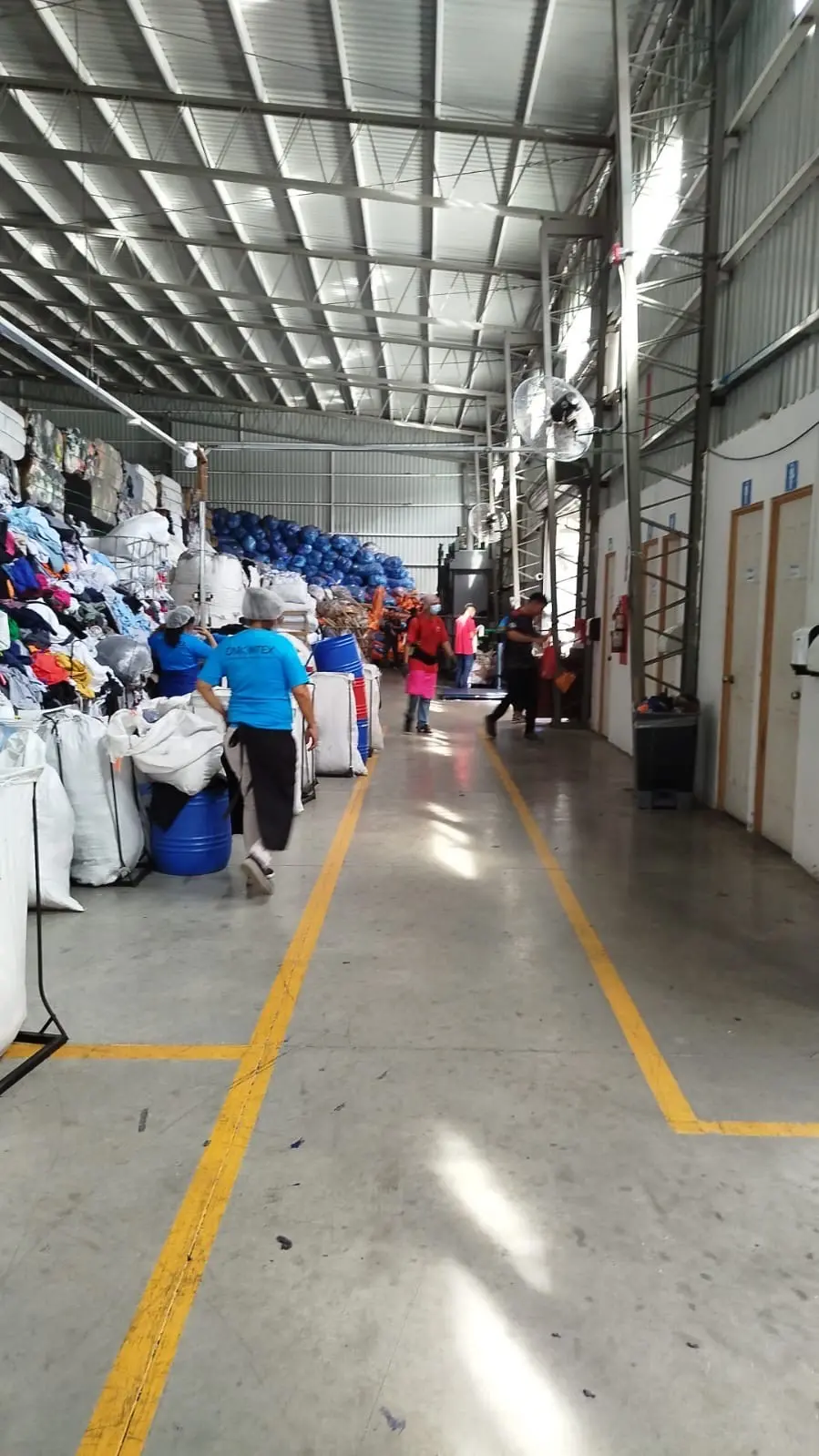
Manual sorting process ensures purity and consistency in every shipment.
Container-ready logistics via Puerto Cortes for worldwide delivery.
Trade agreement benefits for USA-bound shipments. Duty-free eligible.
Full support in English and Spanish. Response within 24 hours.
We process cotton waste (C1, C2), mixed textile blends (C6), raw fabric waste (C8), binding tape (S1 white, S2 color), overlock scraps (S3), and sewing thread waste (ST2). We also handle wet fabric waste (C11) and cardboard byproducts from textile operations (CB1, CB3).
By fiber content and source operation. Cotton waste is separated from poly-cotton blends. Binding tape is collected from cutting operations. Overlock scraps come from sewing lines. Each stream has consistent composition because it originates from a single production process.
Yes. Every bale includes documentation of origin factory, fiber content, and processing date. Because we source from a known network of Honduras maquila operations, we can trace any shipment back to its production source. This traceability supports compliance with EU textile recycling regulations.
Get wholesale pricing and container availability within 24 hours.