Cotton yarn waste from Honduras spinning operations: roving ends, ring frame bobbin waste, cone stripping waste, and sewing thread waste. Classified by color (white, natural, dyed) and composition. Sold in baled 500kg units or palletized boxes. HS 5202.99 classification. FOB Puerto Cortes $0.50-0.75/kg depending on grade and staple condition.
A common misconception among new spinning mill managers: treat yarn waste as pure rejection. Experienced Indian mills in Coimbatore and Erode know better. Yarn waste — specifically roving ends, ring frame bobbin residues, and cone stripping waste — contains partially twisted fiber with preserved staple length that outperforms carding waste by 40-60% in regenerated yarn strength. The blending economics work decisively: adding 10-15% cotton yarn waste (KY1 white grade, $0.72-0.75/kg FOB) to a virgin cotton spinning blend reduces raw material cost by $0.08-0.12/kg without measurable quality degradation in counts 10-20s. For a mill producing 500 tonnes/month of 16s yarn, this is $40,000-60,000 monthly saving. Post-industrial yarn waste from Honduras specifically appeals to Indian mills because it comes from contemporary spinning operations using the same Rieter and Lakshmi machinery as Indian mills — meaning the fiber has been processed identically, with predictable staple characteristics. By contrast, yarn waste from older European or Japanese mills carries different processing signatures and blending behavior.
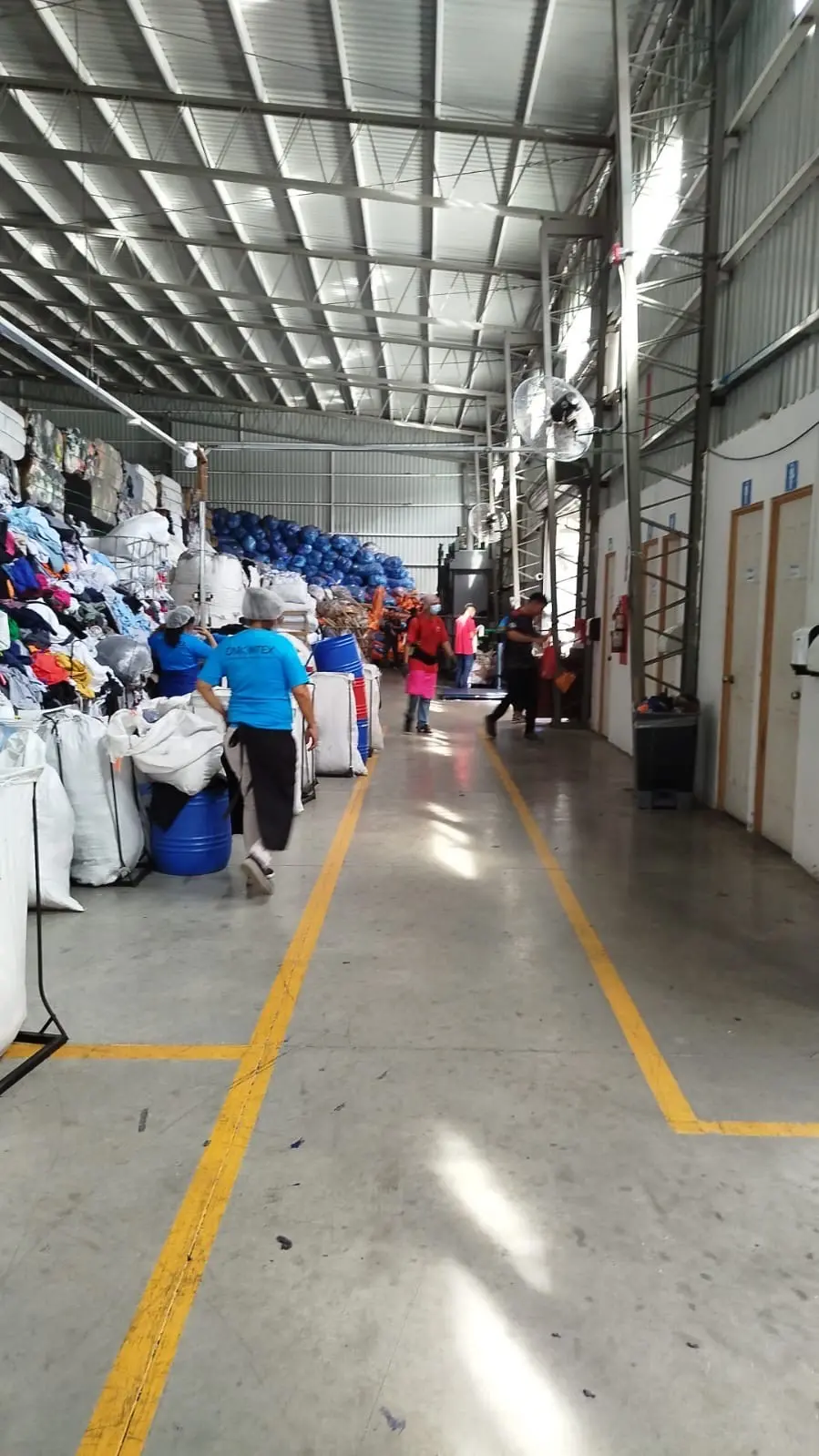
Specific SKUs in this category ready for India-bound containers.
| SKU | Product Name | Spanish Name |
|---|---|---|
| KY1 | 100% Cotton Yarn | Hilaza 100% Algodón |
| KY2 | Mixed Yarn | Hilaza |
| KY3 | 100% Polyester Yarn | Hilaza 100% Poliéster |
| Y1 | Yarn Spool (>5 Lb) | Hilaza mayor a 5 Lb |
| Y3 | Thread Spool (>2 Lb) | Hilo mayor a 2 Lb |
Add 10-15% cotton yarn waste to virgin cotton in standard ring spinning to reduce raw material cost. KY1 white grade preserves yarn appearance in light-colored end products.
Higher blend ratios (30-50%) with yarn waste as primary input for OE-spun shoddy yarn used in blankets, floor rugs, and industrial fabrics. KY2 color grades work well for dark final products.
ST2 sewing thread waste for specialized blend operations producing low-grade industrial thread, kite string, and technical cordage. Niche application with premium margins for specialized mills.
Cotton yarn waste as raw material for candle wicks and oil lamp wicks — growing market for hand-loomed natural wick manufacturers in Gujarat and Tamil Nadu. Requires KY1 white cotton only.
28-35 days transit via Panama Canal. Direct calls to JNPT and Mundra.
Control Union-audited recycled content chain. BIS compliance documentation on request.
Double-wrap HDPE + desiccant packs. Moisture locked below 8% for long-transit integrity.
Accept confirmed LCs from HSBC, Citi, Standard Chartered India branches. T/T 30d for repeat buyers.
KY1: white roving and ring frame bobbin waste, undyed 100% cotton — $0.72-0.75/kg FOB, highest demand for blend applications. KY2: color yarn waste (dyed cotton and cotton blends) — $0.55-0.62/kg. KY3: polycotton yarn waste (blended compositions) — $0.50-0.55/kg. Y1: sewing thread waste, cotton-polyester core — $0.60-0.65/kg. Y3: mixed yarn waste (all types blended) — $0.48-0.52/kg. All baled at 500kg.
Our yarn waste retains 65-80% of original staple length because it comes from post-spinning operations (roving, ring frame, cone winding) rather than mechanical recycling of finished fabrics. Average staple length: 18-24mm for shorter fiber grades, 26-32mm for higher grades. Micronaire typically 3.8-4.6. This compares favorably to mechanically recycled fiber from rags (typically 12-18mm staple) — enabling higher quality regenerated yarn output.
HS 5202.99 (cotton yarn waste not elsewhere specified): BCD 10% + IGST 5% + Social Welfare Surcharge 10% of BCD = effective total duty approximately 16.5% on CIF value. Advance Authorization (AA) licensing available if yarn waste will be used for export-oriented spinning operations, providing duty-free import subject to export obligation. EPCG scheme also applicable for mills investing in new spinning machinery.
FOB and CIF quotes with duty-breakdown landed cost for Panipat, Tirupur, Erode, or Coimbatore within 24 hours.